A review loop that turns visual judgment into a traceable catalog.
RECORD THROUGH SEPTEMBER 7, 2026
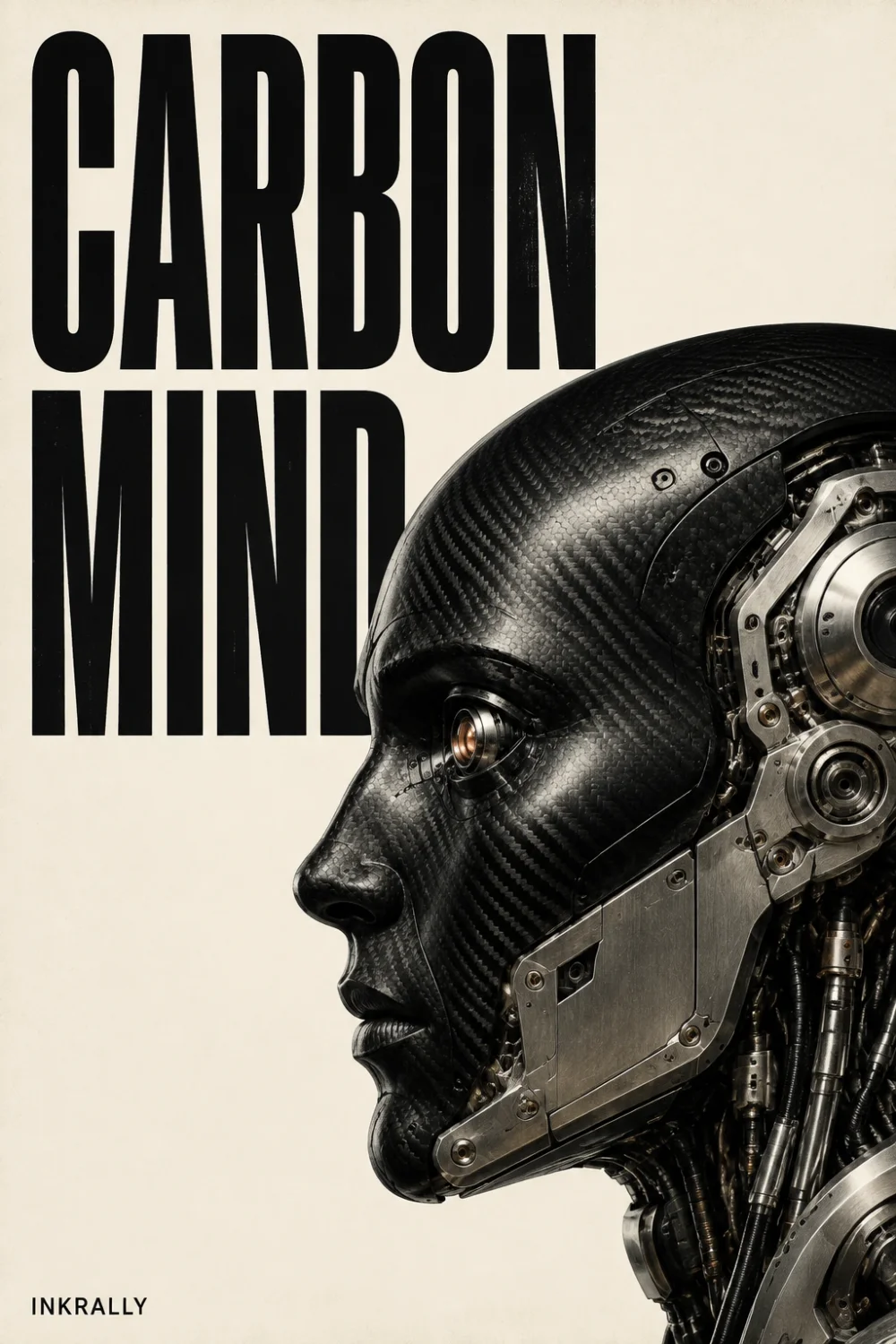
Carbon Mind artwork from INKRALLY
01 / THE QUESTION
How do you improve a generated catalog without losing the character of the strongest originals?
The art spans technology, aerospace, automotive, cosmic, and other interests. Image generation produced bitmap concepts. A separate review interface let Ethan evaluate individual pieces, so subsequent work could respond to specific composition and subject issues.
WHAT THE WORK SHOWED
The important unit became the selected version of an artwork. Ratings, revision notes, and stable product identities made selection an explicit part of the build.
02 / THE METHOD
The decisions behind the output.
01
Generate a reviewable concept
A concept begins with a subject, a composition, and a collection context. The original image is retained before web derivatives are made. Image generation is a separate tool in the workflow.
02
Record selection and revision
The review gallery collects ratings and written notes per artwork. Favorites guide further exploration. Rejected work is retired from the active catalog; a revision receives its own version and returns to review.
03
Integrate the selected source
An explicit selection maps each product to the intended source. That selection then drives storefront imagery and catalog integration. A file being newer does not make it the approved version.
03 / TECHNICAL NOTES
How the parts fit together.
A small data model with consequential states
Concept, selected concept, revision under review, and production-approved file describe different states. Keeping those states separate prevents a visual approval from silently becoming a manufacturing approval.
Raster content stays raster
Some composition files combine a raster image with a vector signature. The SVG container preserves layout and exact signature geometry, but it does not make the embedded artwork infinitely scalable.
Feedback changes the next decision
The review records inform subsequent art direction. They are not evidence of model fine-tuning. The observable mechanism is a new revision made against a specific note.
04 / THE REVISION
Where the approach changed.
BEFORE
Broad generation produced strong pieces alongside weaker ideas and compositions that needed corrections.
AFTER
The active storefront reached 155 selected artworks after 28 approved additions, with new concepts still separate from print approval.
The decision: Ethan rated individual works and selected which versions should survive.
ETHAN / DIRECTION & REVIEW
Ethan rated and selected the artwork, rejected weaker concepts, and specified the changes needed in revisions.
GPT-6 + TOOLS / EXECUTION
GPT-6 directed image-generation tools, built the review gallery, applied selections, and maintained catalog and revision records.
05 / EVIDENCE & LIMITS
What supports the claim.
Recorded release
The September 7 catalog release lists 155 active storefront pieces, including 28 approved additions.
Selection checks
The import audit records source identity, concept approval, and signature checks; the additions remain explicitly unapproved for printing.
Limit
Catalog size measures selected digital work. It does not measure physical stock, demand, sales, or production readiness.
Based on retained project records and selected public artifacts. Historical checks describe the recorded release; they are not continuous monitoring or an independent audit.
THE NEXT CHECKPOINT
Resolve remaining concept reviews and approve each selected work separately for physical production.